

The proven carbon market infrastructure for governments
A6 Labs builds, deploys and operates Article 6-compliant national carbon registries. Our platform runs the world's first infrastructure in Zimbabwe, with further deployments scheduled across multiple African nations in 2026.
Zimbabwe operates the world's first Article 6-compliant national carbon registry on the A6 Labs platform
Onboarding and auditing of new and existing carbon projects. Issuing, tracking, and corresponding adjustment of carbon credits on blockchain. Transferring credits internally and between registries.
World's #1
Article 6-compliant national carbon registry.
May '25
Launched by President Mnangagwa at the SADC Summit.
2M+
Carbon credits have already been issued on-chain.
First ever
Corresponding adjustment and Article 6 inter-registry transfer.
Article 6 turns climate commitments into national revenue
Without the right infrastructure, governments lose both
Under Article 6 of the Paris Agreement, every carbon credit issued in a country requires sovereign authorisation. That authorisation is the most valuable lever a government holds in the global carbon market. It is also the hardest to operationalise.
Sovereignty
Without a national registry, governments authorise credits but capture none of the value. Project developers register elsewhere, revenues go to foreign standards, and the country bears the climate accountability without the financial return.

Revenue
A national registry lets governments take a defined share of every credit issued and every fee collected. Revenue starts within months of launch and grows with project pipeline. The model is designed so governments benefit financially from day one.


Compliance
Article 6 readiness is no longer optional. Global buyers, CORSIA-compliant airlines, and international standards will only recognise credits that are properly authorised and adjusted. Governments without infrastructure are left out of the market.


Article 6 readiness requires two things: a legal framework and a working platform
We provide the platform and work with the specialists who provide the framework
A national carbon registry is not a piece of software. It is a sovereign system that must align with domestic law, Paris Agreement obligations, and international market rules. Getting it right requires legal and regulatory expertise that sits outside the technology stack. That expertise is provided by Terraviva Services, pioneers of the world's first Article 6-compliant legal and regulatory framework.
More about Terraviva
Technology
A6 Labs delivers the technology: the registry platform, the on-chain infrastructure, and the operational tools governments use day to day.
- +Registry platform
- +On-chain issuance and transfer
- +Government admin systems
- +Integration with global registries
- +Ongoing technical operations
Policy and regulation
We collaborate with Terraviva Services, pioneers of the world's first Article 6-compliant legal and regulatory framework, deployed in Zimbabwe.
- +Article 6 readiness
- +National legal framework
- +Regulatory design
- +Capacity building
- +Alignment between law and platform
Why governments choose A6 Labs
A6 Labs removes the barriers that have kept governments out of the carbon market. We deploy fully compliant national registries with no upfront cost, full sovereign control, and a revenue model that funds itself from day one.
Speed to revenue
New registries go live within months, not years. Revenue starts as soon as the first credits are issued.
No upfront cost
A6 Labs builds, deploys and operates the platform with no capital expenditure required from the government. Our model is designed to enable a self-funding platform.
Full control
Governments retain full control over which projects are approved, which credits are authorised, and how their share of credits and fees is deployed, without depending on external standards bodies.
Built for Article 6
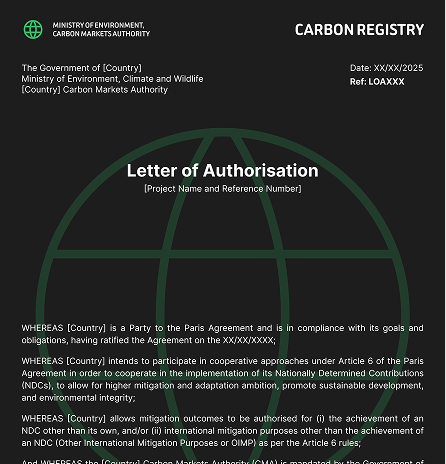
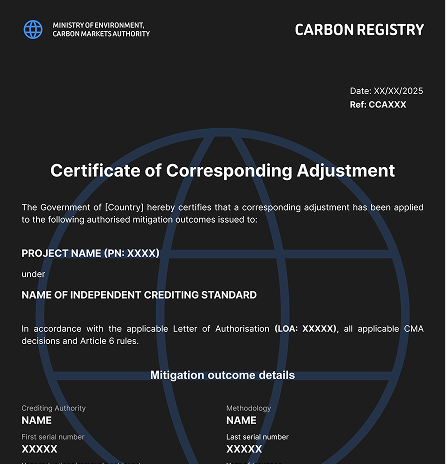
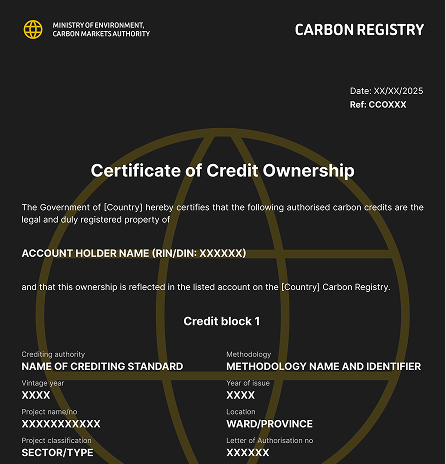
The platform is designed from the ground up around Letters of Authorisation, Corresponding Adjustments, and the full Article 6.2 workflow. Compliance is built in, not retrofitted.
The platform
A6 Labs is not off-the-shelf software. Every deployment is customised to the country's legal framework and operational requirements, supported by dedicated local resources and uniquely branded for each government. The underlying platform, proven and mature, stays the same.
Onboarding and compliance
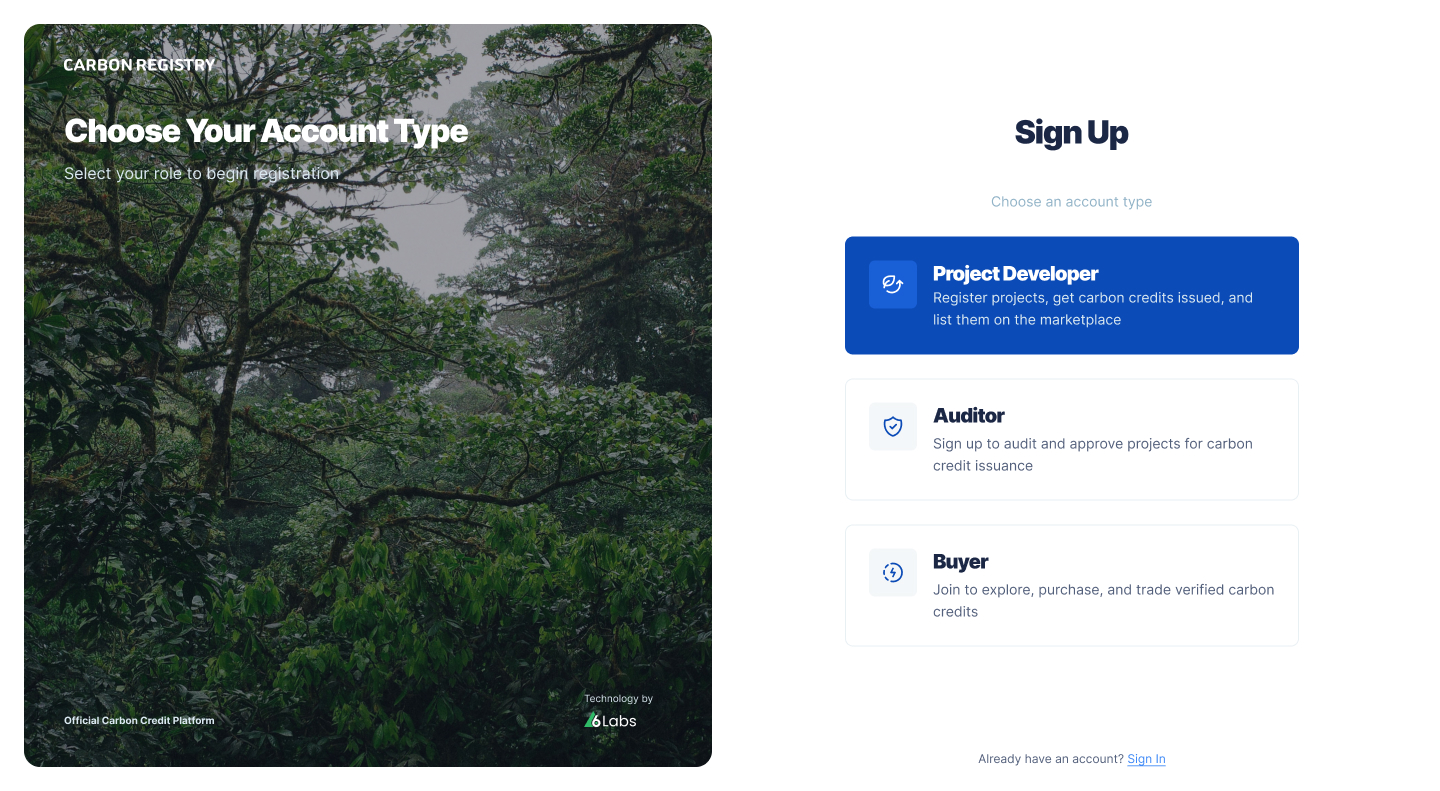
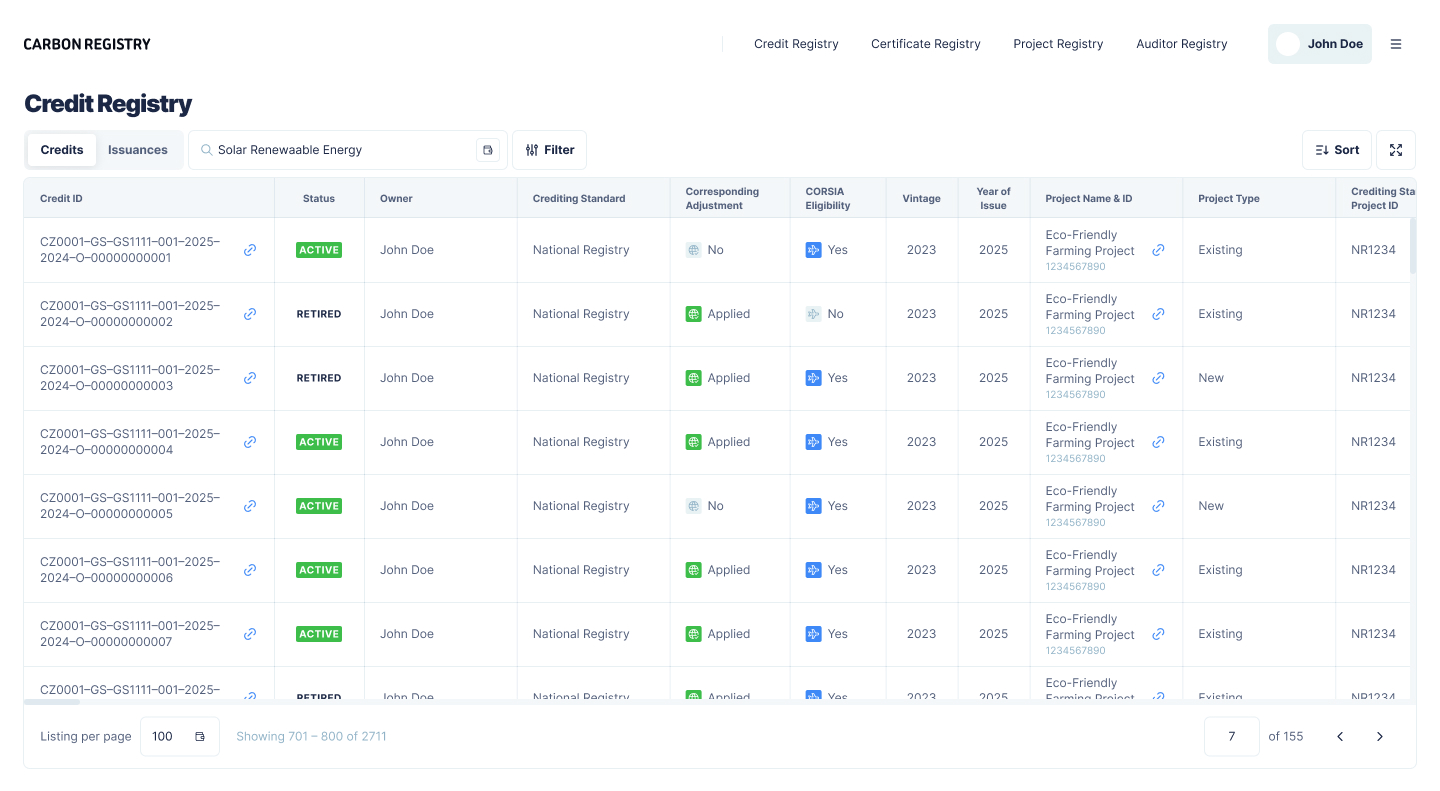
Project developers, auditors and buyers register through structured workflows aligned with Article 6 requirements. Governments approve, reject or query participants and projects through a dedicated administrative portal. Letters of Authorisation and No Objection are generated programmatically and stored on-chain.
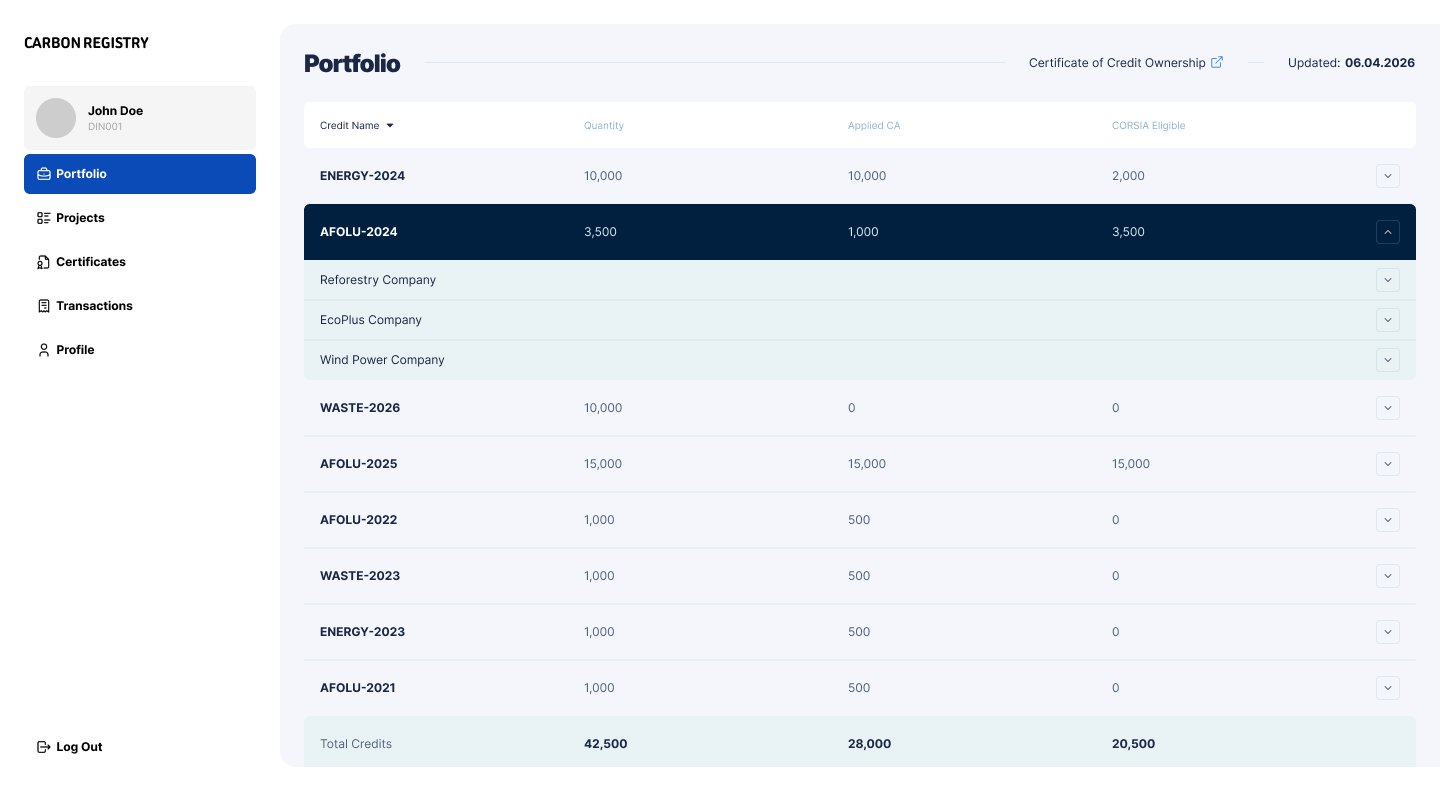
Issuance, transfer, retirement
Carbon credits are issued on-chain at the point of verification and tracked through their full lifecycle: corresponding adjustment, transfer, retirement. Every action is publicly verifiable. Inter-registry transfers, proven on the Zimbabwe Carbon Registry, connect the platform to the wider global carbon market.
Sovereign infrastructure
We offer default deployment on AWS, with on-premise options where required. All documentation and issuance records are anchored on Base and Ethereum, with publicly verifiable provenance for every credit. Each government's admin portal is fully customised, including branding, fee structure and workflows to reflect national policy requirements.
Where required, A6 Labs deploys additional modules on the same platform, under the same commercial structure.
- Carbon Tax administration
- Renewable Energy Certificate (REC)
To make Article 6 benefit the countries doing the climate work
The Paris Agreement gives governments a framework to monetise climate action. The infrastructure to actually do it has lagged behind
A6 Labs closes that gap. We build the systems that let nations participate in the global carbon market on their own terms, with sovereignty, transparency and proper financial return.
THE TECHNOLOGY IS MATURE.
THE COUNTRIES ARE READY.
OUR JOB IS TO DELIVER.
Case Studies
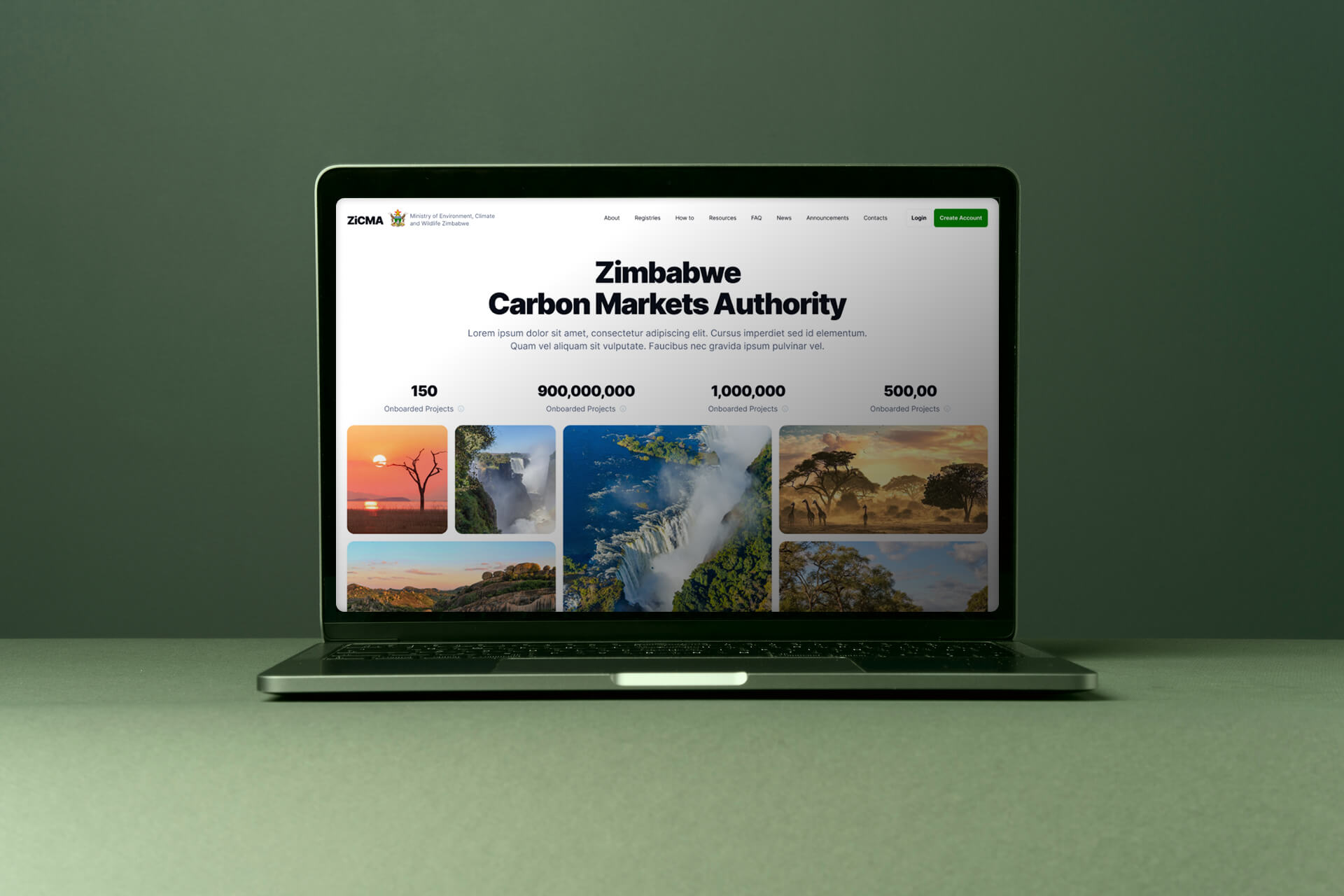
Building the world's first Article 6 compliant national carbon registry

Designed, deployed and operationalised in partnership with the Zimbabwe Carbon Markets Authority and Terraviva Services
In May 2025, President Emmerson Mnangagwa launched the Zimbabwe Carbon Registry (ZCR) at the Southern African Development Community summit. It was the first national carbon registry globally compliant with Article 6 of the Paris Agreement.
Visit ZiCMA
Today the platform is fully operational. Project developers register projects, auditors verify them, governments administer the market through a dedicated admin portal, and all credits are issued, tracked and retired entirely on-chain.

The Zimbabwe deployment was delivered with Terraviva Services, who designed the country's Article 6 legal and regulatory framework. The ZCR is now administered by the Zimbabwe Carbon Markets Authority (ZiCMA), which manages the national carbon market on the platform.

Additional deployments are scheduled across multiple African nations in 2026. Five-plus countries are currently in active development or negotiation.
News
Zimbabwe Debuts Blockchain Registry for Carbon-Credit Trading
Zimbabwe has debuted a blockchain-enabled registry that will allow approved project developers to trade the nation's carbon credits.
Zimbabwe launches blockchain carbon registry
Coverage of the ZCR launch: first blockchain carbon credit registry to boost transparency, trust, investment, and sustainability.
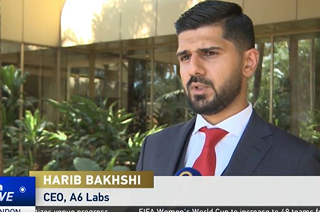
Zimbabwe launches Article 6 registry
New regulations align with Article 6, launching a national registry and clarifying fees, revenue sharing, and project requirements.

Zimbabwe registry launch
Zimbabwe launched a blockchain-based national carbon registry and unveiled new regulatory measures.

Zimbabwe launches National Carbon Registry in carbon market push
The Ministry of Environment launches the world's first blockchain-based national carbon registry, with Article 6-ready regulations.
Leadership

Harib Bakhshi
Chief Executive OfficerFounder and CEO of A6 Labs. Thirteen years in technology, seven years in blockchain. Led the design and delivery of the world's first Article 6-compliant national carbon registry. Based in Dubai.

Amrit Hothi
Head of Business OperationsLeads commercial operations and the Zimbabwe deployment. Manages day-to-day relationships with government counterparts and the in-country teams across all deployments.

Alex Ring
Head of Programme ManagementDirects country deployments from contract through to launch. Ensures alignment between technology, legal and operational teams throughout delivery and implementation.

Mladen Milicevic
Engineering LeadLeads the engineering team building the platform. Responsible for technical strategy, system architecture, and the successful delivery of every deployment.
FAQ
A6 Labs builds and operates national carbon registries for governments under Article 6 of the Paris Agreement. We deliver the technology platform, integrate it with the country's legal framework, and run it on behalf of the government for the long term.
National governments and the carbon market authorities that administer Article 6 on their behalf. Project developers, auditors and buyers use the platform once their host country has deployed it.
A new country deployment goes live within approximately three months of contract signing. Legal and policy work runs in parallel through this period. Governments typically begin earning revenue from platform fees and credit issuances shortly after launch.
There is no upfront cost to the government. A6 Labs builds, deploys and operates the platform under a long-term commercial model in which the government retains a meaningful share of credits and platform fees. The structure is designed so governments benefit financially from day one.
Article 6 readiness requires two things: a legal framework and a working platform. A6 Labs delivers the platform. For the legal and regulatory framework, we work alongside Terraviva Services, the policy specialists who designed Zimbabwe's framework. Both partners typically engage in parallel from the start of an engagement.
Blockchain solves a specific problem for sovereign carbon markets. It makes every credit publicly verifiable, prevents double-counting, and provides immutable proof of authorisation and corresponding adjustment. These are the requirements Article 6 imposes. The technology is the means, not the message. The platform is built so that governments, auditors and buyers do not need to understand the underlying chain to use the system.
All credit issuance, transfer and retirement records are stored on public blockchain infrastructure (Base and Ethereum), making them tamper-evident and independently verifiable. The administrative environment is hosted on AWS by default, with on-premise options where required by national policy. Access controls, audit logs and government-controlled approvals govern every action.
Each deployment is configured so that a defined share of issued credits supports the country's own NDC, a national buffer account, and a climate fund administered by the government. The remainder flows to the project developer. The platform makes these flows transparent and automatic.